A Practical Guide to Creating a Home Gym in Any Spare Room
You don’t need a garage or a dedicated gym building to train at home.
For many homeowners, an unused spare room or box room offers everything needed to create a practical home gym. Whether you’re looking to improve your fitness, strength train, or simply exercise more consistently, converting a spare room can be one of the most cost-effective ways to create a workout space you’ll actually use.
The key isn’t having more space, it’s making better use of the space you already have.
In this guide, we’ll show you how to plan your room, choose the right layout, avoid common mistakes, and create a home gym that works for your lifestyle.
Is a Spare Room Big Enough for a Home Gym?
Absolutely. One of the biggest misconceptions is that you need a large room filled with expensive equipment.
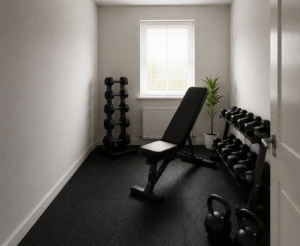
In reality, many home workouts require very little space. Even a typical box room can comfortably accommodate an adjustable bench, dumbbells, resistance bands, and quality gym flooring.
The goal isn’t to recreate a commercial gym, it’s to create a space that’s practical, comfortable, and easy to use.
Decide How You Want to Train
Before buying any equipment, think about the type of training you’ll actually do.
Your training style will determine how much space and equipment you need.
|
Training Style |
Recommended Equipment |
|
Strength Training |
Adjustable bench, dumbbells, squat rack |
|
Functional Fitness |
Kettlebells, resistance bands, open floor space |
|
Cardio |
Exercise bike, rowing machine or treadmill |
|
General Fitness |
Bench, dumbbells, resistance bands |
Buying equipment based on your goals, not someone else’s setup, helps you make better use of your room and your budget.
Plan the Layout Before You Buy Anything
-
One of the easiest ways to waste space is by buying equipment before planning where it will go.
Instead, sketch a simple layout of your room first.
Think about:
- Where natural light enters
- Door clearance
- Windows
- Wardrobes or built-in storage
- Power sockets
- Space to move safely around equipment
Leave enough room to comfortably perform exercises without feeling cramped.
A little planning now can save money later.
Start with the Flooring
Before adding heavy equipment, it’s worth thinking about what’s underneath it.
Quality gym flooring helps:
- Protect timber, tiled, or concrete floors
- Reduce noise and vibration
- Improve grip while training
- Create a more stable workout surface
- Define your workout area
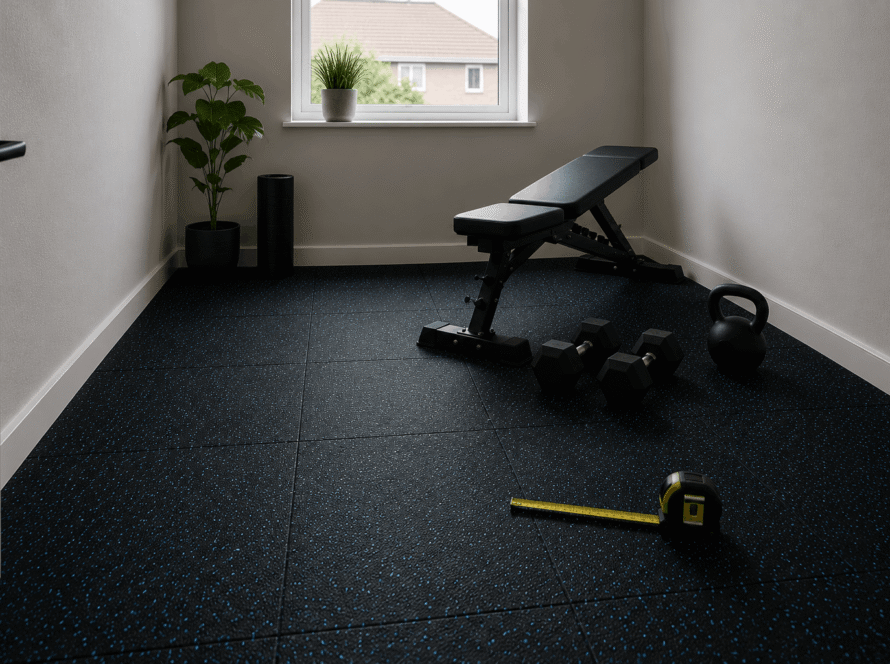
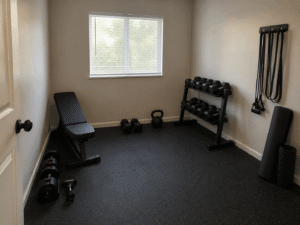
Rubber gym mats are widely used in home gyms because they’re durable, easy to maintain, and suitable for a wide range of training styles.
Our 20mm Rubber Gym Mats are ideal for spare rooms and box rooms, providing reliable floor protection and a stable surface for everyday training.
Small Design Changes That Make a Big Difference
A home gym doesn’t need to feel dark or cluttered.
Simple design choices can make even a compact room feel larger and more inviting.
Consider:
- Installing a wall mirror to create the feeling of more space.
- Choosing light wall colours to brighten the room.
- Using wall-mounted storage instead of leaving equipment on the floor.
- Keeping cables and accessories organised.
- Making the most of natural light whenever possible.
A clean, organised room is often more motivating to train in.
What Can You Fit in Different Spare Room Sizes?
You don’t need a huge room to build a practical home gym.
|
Room Type |
Typical Setup |
|
Small Box Room |
Rubber gym mats, adjustable bench, dumbbells, resistance bands |
|
Standard Spare Bedroom |
Bench, squat rack, dumbbells, storage rack |
|
Large Spare Room |
Strength equipment, cardio machine, stretching area |
Remember, it’s better to have a well-planned small gym than a larger room filled with equipment you rarely use.
Common Mistakes to Avoid
Buying oversized equipment
Large commercial equipment can quickly overwhelm a smaller room.
Choose equipment that’s designed for home use wherever possible.
Forgetting about storage
Leaving weights and accessories on the floor makes the room feel smaller and creates unnecessary trip hazards.
Simple shelving or wall storage keeps everything organised.
Ignoring ventilation
Training generates heat.
If possible, make use of windows or fans to keep the room comfortable throughout your workout.
Trying to build everything at once
You don’t need to buy an entire gym in one go.
Start with the essentials, then expand your setup as your training progresses.
How Much Does It Cost?
One of the biggest advantages of building a home gym is that you can do it gradually.
Here’s an example of a simple beginner setup.
|
Item |
Typical Starting Cost |
|
Rubber Gym Mats |
From €150 |
|
Adjustable Bench |
€100–250 |
|
Dumbbells |
€100–300 |
|
Resistance Bands |
€20–50 |
You can always add more equipment over time as your needs change.
Turn Your Spare Room Into a Home Gym?
Creating a home gym isn’t about having the biggest room or the most expensive equipment.
It’s about creating a space that’s convenient, comfortable, and built around the way you like to train.
Start with a practical layout, invest in quality flooring, and build your gym at your own pace.
Before long, your spare room could become one of the most used spaces in your home.
Ready to get started?