What actually works, and what’s just a partial fix
If you’re training at home, floor damage is one of the most common (and most avoidable) worries. Dropped weights, dragged equipment, and constant impact can all take a toll on wooden, tiled, vinyl, or even concrete floors over time.
Here’s what actually helps protect your floor, and what falls short.
What Damages Floors During Home Training
Before getting into solutions, it helps to know what you’re actually protecting against:
- Impact from dropped weights — even a controlled drop transfers force to the floor.
- Scratches and dents — from dragging equipment or weight plates across the floor.
- Repeated vibration — ongoing strength training creates vibration that can travel through floors and into surrounding rooms.
- Moisture and sweat — particularly on timber flooring, where prolonged exposure may contribute to staining or warping over time.
Common (Partial) Fixes, And Why They Fall Short
Towels or blankets
Better than nothing, but they shift, bunch up, and offer minimal impact protection. They’re not a practical long-term solution if you’re regularly lifting weights.
Foam mats
Fine for stretching or light bodyweight workouts, but they compress easily under load. They’re not designed for repeated impact from heavier dumbbells, barbells, or gym equipment.
Carpet
Common in spare rooms, but not ideal for strength training. Carpet can make equipment less stable, traps moisture more easily, and tends to wear faster under repeated heavy loads.
Just being careful
Good lifting technique always helps, but it isn’t a complete strategy. Accidents happen, and even a single dropped weight can damage some flooring surfaces.
What Actually Works: Proper Rubber Flooring
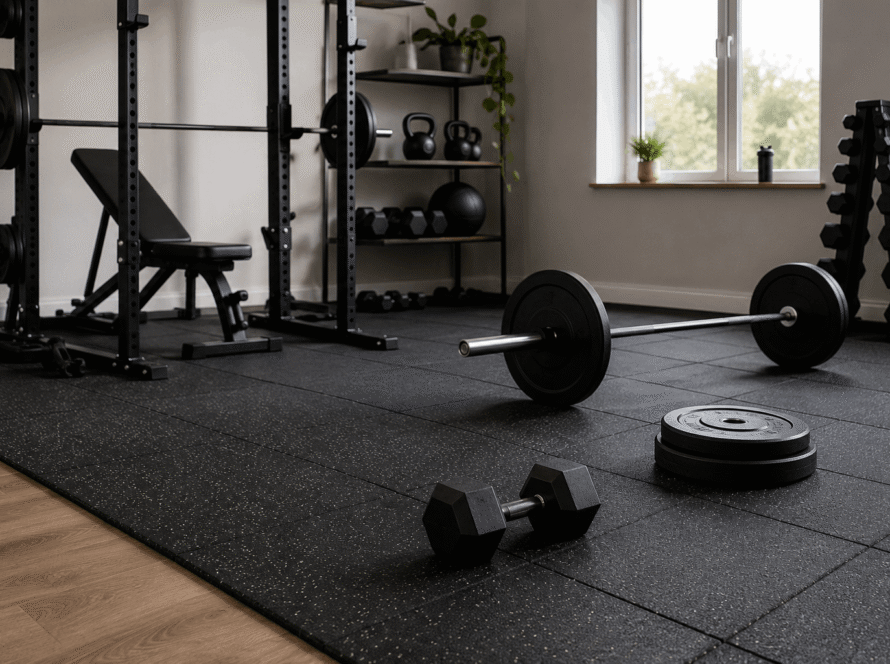
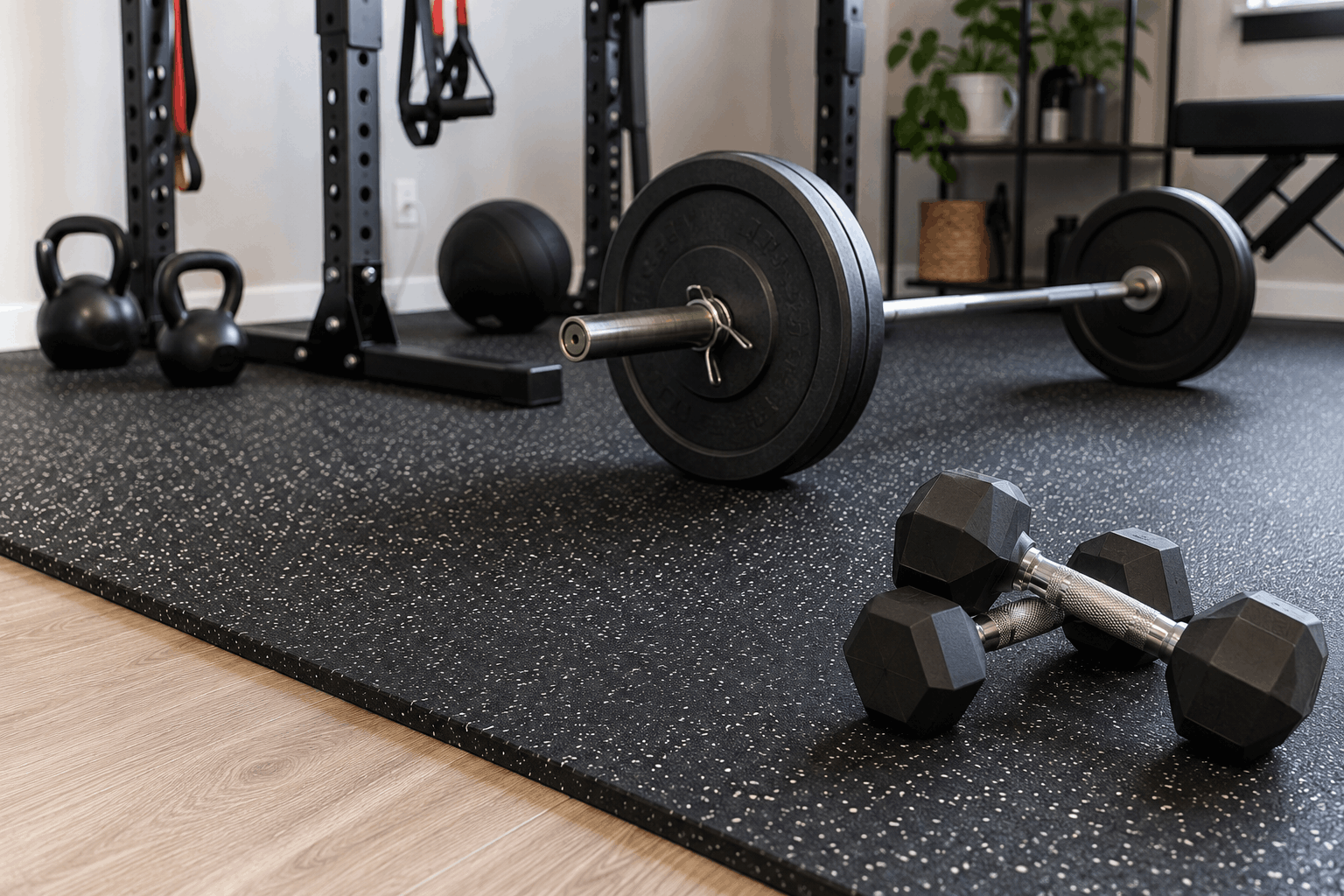
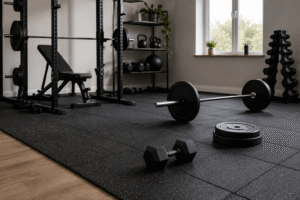
Of the options above, rubber gym flooring is the only one specifically designed to withstand repeated impact from strength training while helping to protect the floor underneath.
Here’s what matters:
Thickness
For many home gyms used for dumbbells, benches, and general strength training, 20mm high-density rubber mats provide an excellent balance of impact protection, durability, and stability.
If you regularly perform Olympic lifts or repeatedly drop heavily loaded barbells from overhead, thicker flooring, crash pads, or a dedicated lifting platform may provide additional protection.
Anti-slip surface
Beyond helping to protect your floor, a stable, grippy surface can improve footing during exercises like squats, deadlifts, and presses.
Noise and vibration reduction
If you’re upstairs, in an apartment, or sharing walls with neighbours, this matters more than most people expect. Quality rubber flooring can help reduce the amount of impact noise and vibration transmitted to surrounding rooms.
Does It Work on Every Floor Type?
Concrete
Rubber flooring works well over concrete and adds cushioning that bare concrete doesn’t provide.
Wood
Rubber mats can significantly reduce scratches, dents, and general wear from gym equipment. While no flooring eliminates every risk completely, they provide far greater protection than placing equipment directly onto timber.
Tile
Rubber flooring can help reduce the risk of cracks or chips if weights are accidentally dropped, while also providing more grip than bare tiles.
Vinyl
Rubber mats can help spread the load of heavy equipment more evenly and reduce everyday wear and indentations over time.
A Simple Rule of Thumb
If you’re doing anything beyond light bodyweight exercises or stretching, towels and foam mats are only temporary solutions.
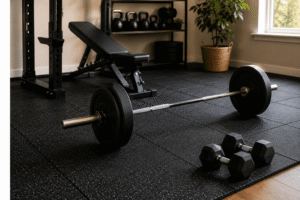
Proper rubber gym flooring is specifically designed to withstand the repeated impact and weight associated with strength training while helping to protect the floor underneath.
Sizing It to Your Space
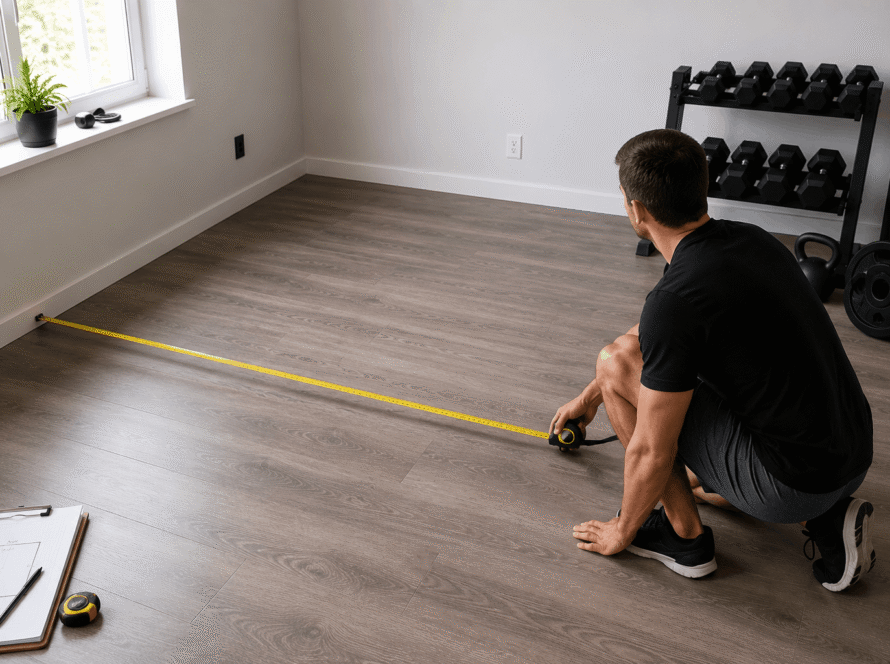
Flooring only protects the area it covers, so it’s worth planning around your training setup rather than simply the size of the room.
Think about where you’ll be lifting, where your equipment will sit, and how much floor you want to protect. If you’re planning to expand your home gym over time, it’s often easier to add more mats as your setup grows.
Ready to Protect Your Floor Properly?
Our 20mm rubber gym mats feature an anti-slip surface, are designed to help reduce noise and vibration, and are CE certified, built to handle real training, not just sit there and hope for the best.