Practical Ways to Create a Functional Home Gym in Your Garage
Not everyone has a dedicated gym room, and that’s completely fine.
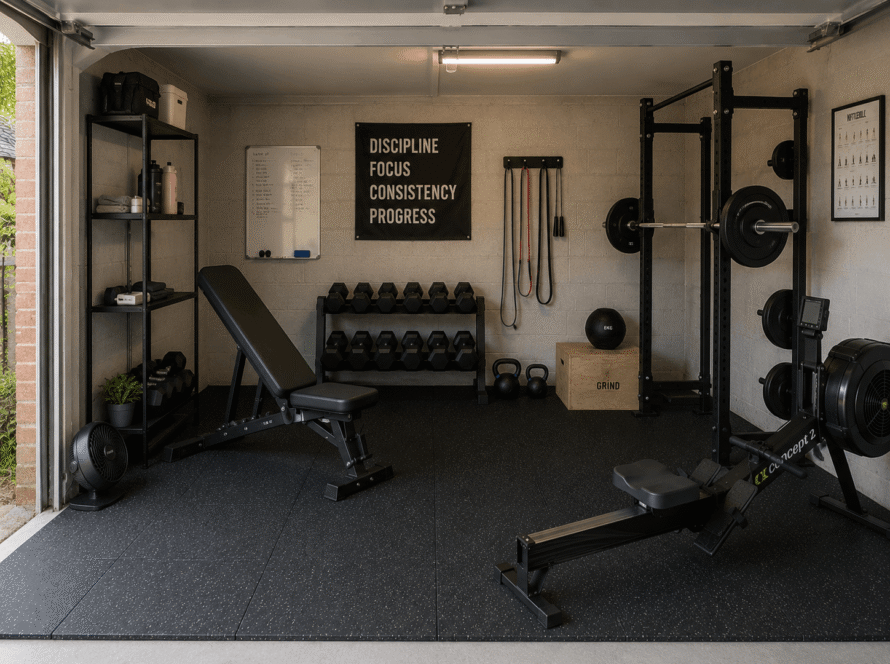
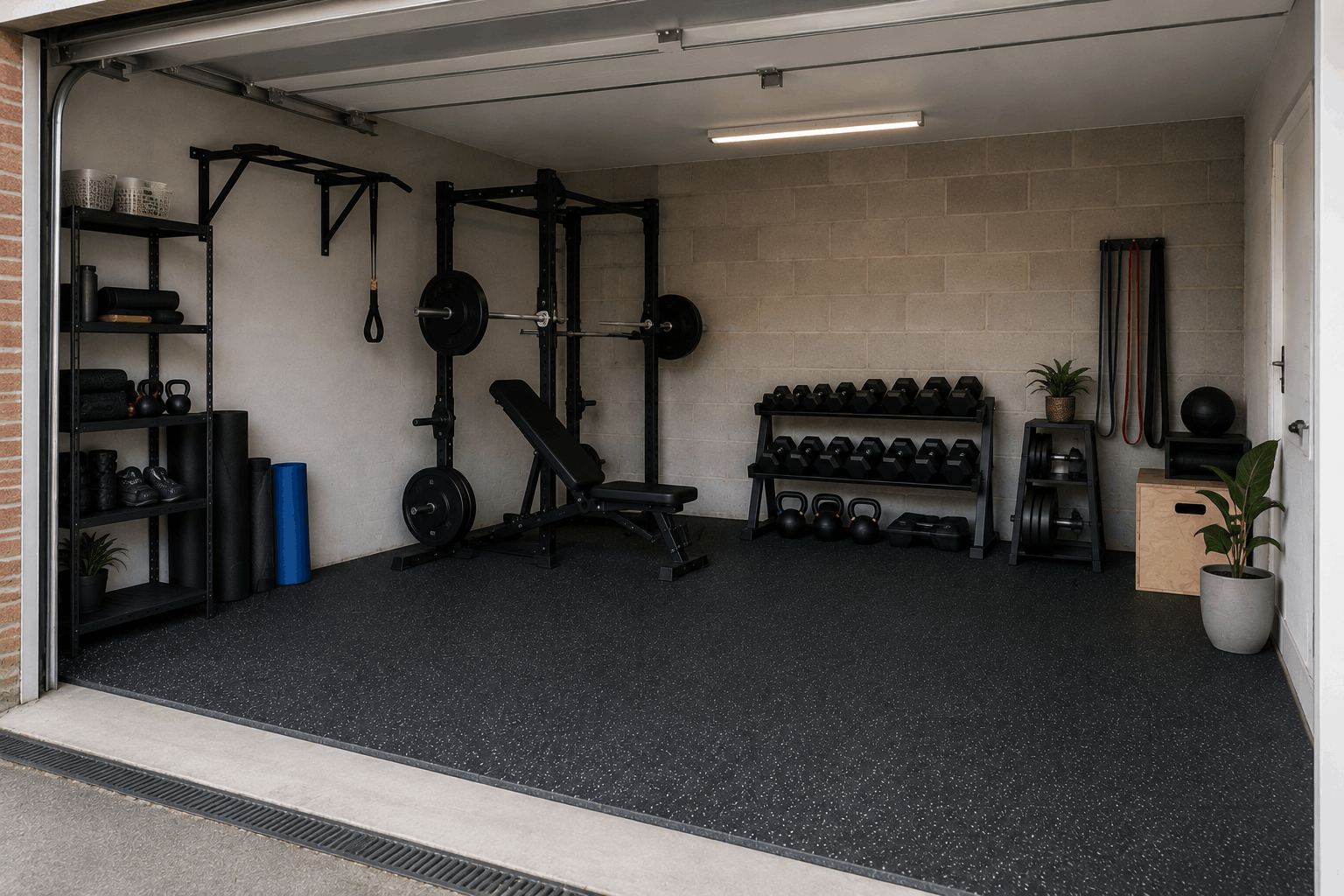
For many homeowners, the garage is one of the easiest places to create a home gym. It gives you a dedicated training space without taking over your living areas, and you don’t need a large garage or an expensive renovation to make it work.
Whether you’re converting a single garage, a compact corner, or simply making better use of the space you already have, thoughtful planning can go a long way.
In this guide, we’ll share practical garage gym ideas to help you create a functional workout space, along with tips on choosing the right flooring before you start.
Why Build a Home Gym in Your Garage?
A garage offers flexibility that many other rooms don’t.
It’s typically easier to dedicate to fitness equipment, provides more room to grow your setup over time, and allows you to separate your workouts from the rest of your home.
Some of the benefits include:
- More space than many spare bedrooms
- Room for larger equipment as your gym grows
- Better ventilation by opening the garage door or windows
- A dedicated workout area that’s always ready to use
Whether your goal is strength training, general fitness, or simply exercising more consistently, a garage can be an excellent place to start.
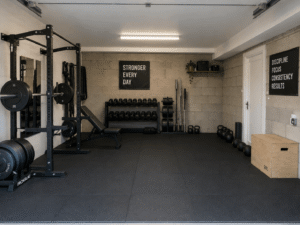
Start with the Right Flooring
Before buying a squat rack, weight bench, or dumbbells, it’s worth thinking about what’s underneath them.
Quality gym flooring helps:
- Protect concrete floors from scratches and impact
- Reduce noise and vibration during training
- Improve grip underfoot
- Create a more comfortable training surface
- Help protect your equipment over time
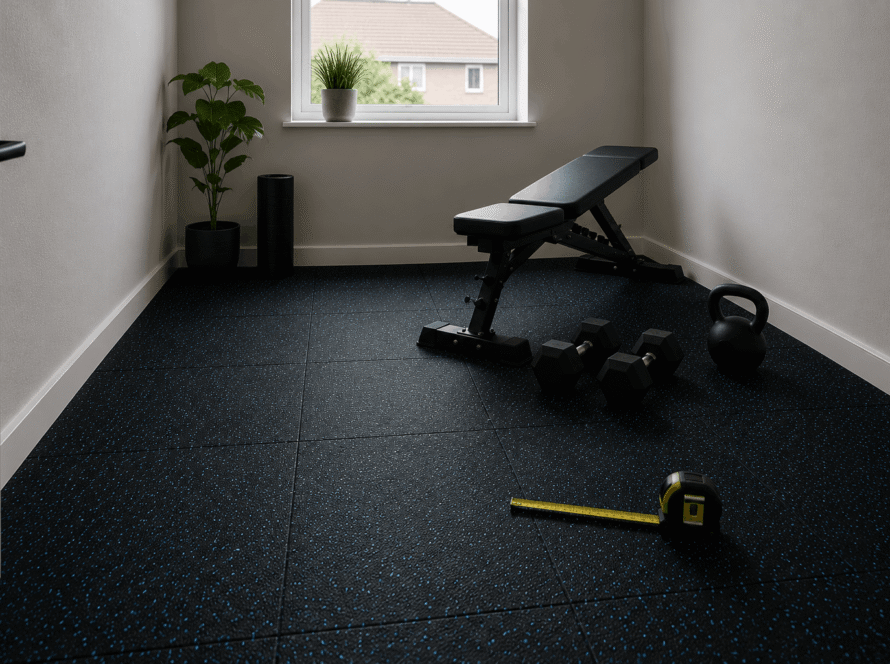
Rubber gym flooring is widely recommended for home and garage gyms because it’s durable, easy to maintain, and designed to handle regular use.
Our 20mm Rubber Gym Mats are suitable for most home gym setups, offering a balance of durability, floor protection, grip, and noise reduction for general strength training and fitness.
Choose Equipment That Fits Your Space
One of the most common mistakes people make is trying to fill every available corner with equipment.
Instead, begin with the essentials and build your garage gym over time.
A practical beginner setup might include:
- Adjustable bench
- Pair of dumbbells
- Resistance bands
- Kettlebell
- Rubber gym flooring
Once you’ve established a routine, you can always add equipment such as a squat rack, barbell, or cable machine later.
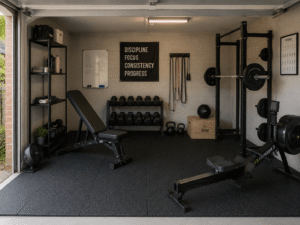
Make Use of Your Wall Space
Floor space is valuable in a small garage.
Installing wall-mounted storage keeps equipment organised while giving you more room to train safely.
Ideas include:
- Weight plate storage
- Barbell holders
- Resistance band hooks
- Wall shelves for accessories
Keeping equipment off the floor also makes your gym feel larger and easier to keep tidy.
Plan Your Layout Before You Buy
Before ordering equipment, think about how you’ll actually move around the space.
Allow enough room to:
- Walk comfortably around your equipment
- Load and unload barbells safely
- Perform exercises without feeling restricted
Planning your layout in advance can help you avoid buying equipment that doesn’t fit or discovering you don’t have enough training space.
How Much Flooring Do You Need?
The amount of flooring you’ll need depends on both the size of your garage and the equipment you plan to use. As a general guide:
|
Flooring Size |
Approximate Area |
Best For |
Typical Setup |
|
4m² |
2m × 2m |
Compact workout corner or small garage |
Bench, dumbbells, kettlebells |
|
10m² |
2m × 5m |
Dedicated home gym |
Rack, bench, free weights |
|
20m² |
4m × 5m |
Larger garage gym |
Multiple machines and training zones |
|
100m²+ |
Custom |
Commercial gyms or larger projects |
Contact us for a custom quote |
Not sure which size is right for your garage?
Send us your garage dimensions and we’ll help you choose the right amount of flooring, no pressure, just practical advice. Contact us here.
Common Garage Gym Mistakes
Buying equipment before flooring
Heavy equipment placed directly on concrete can damage both your floor and your equipment over time.
Starting with quality flooring provides a solid foundation for everything else.
Buying more equipment than you need
You don’t need to recreate a commercial gym.
Begin with equipment you’ll actually use and expand your setup as your training progresses.
Forgetting about storage
Keeping weights and accessories organised helps maximise your available training space and improves safety.
Not leaving enough room to move
Remember to allow space around benches, racks, and barbells so you can train comfortably and safely.
Build Your Garage Gym One Step at a Time
Creating a garage gym doesn’t have to happen overnight.
Start with the essentials, choose quality flooring, and build your space as your training goals evolve.
Whether you’re setting up a compact workout corner or transforming your entire garage, the right foundation will help you create a space you’ll enjoy using for years to come.
Ready to get started?
Explore our premium Rubber Gym Mats and build your home gym with confidence.