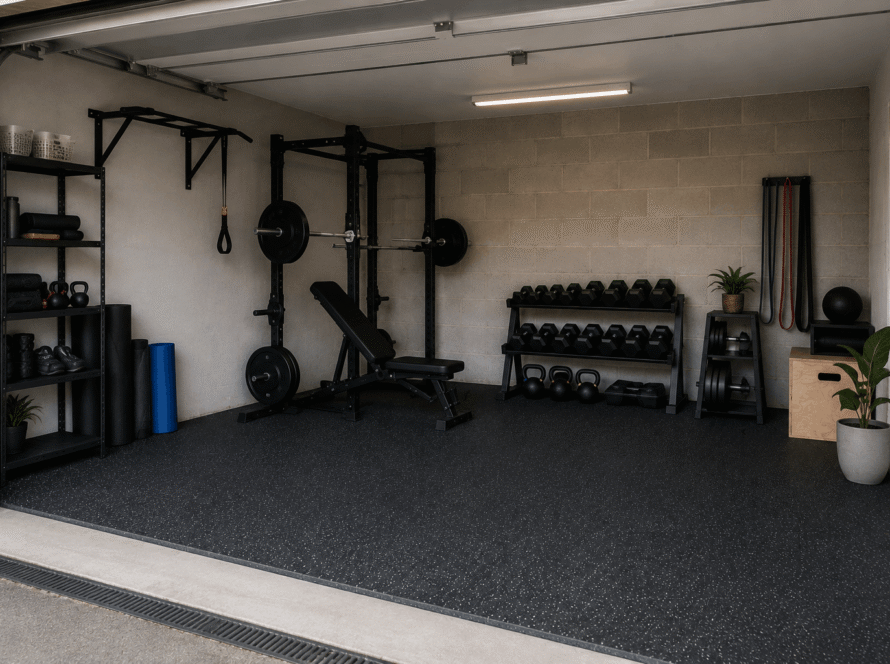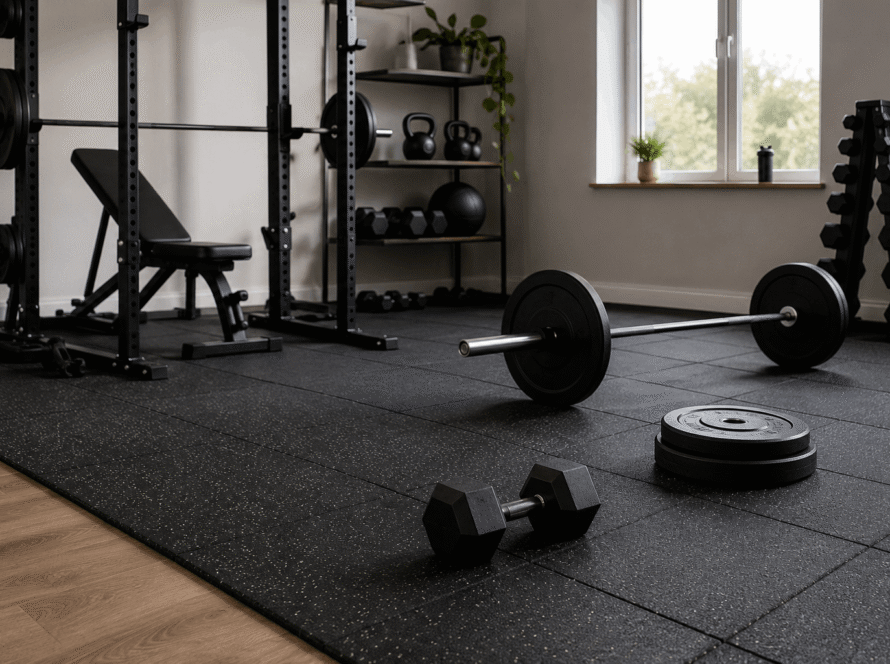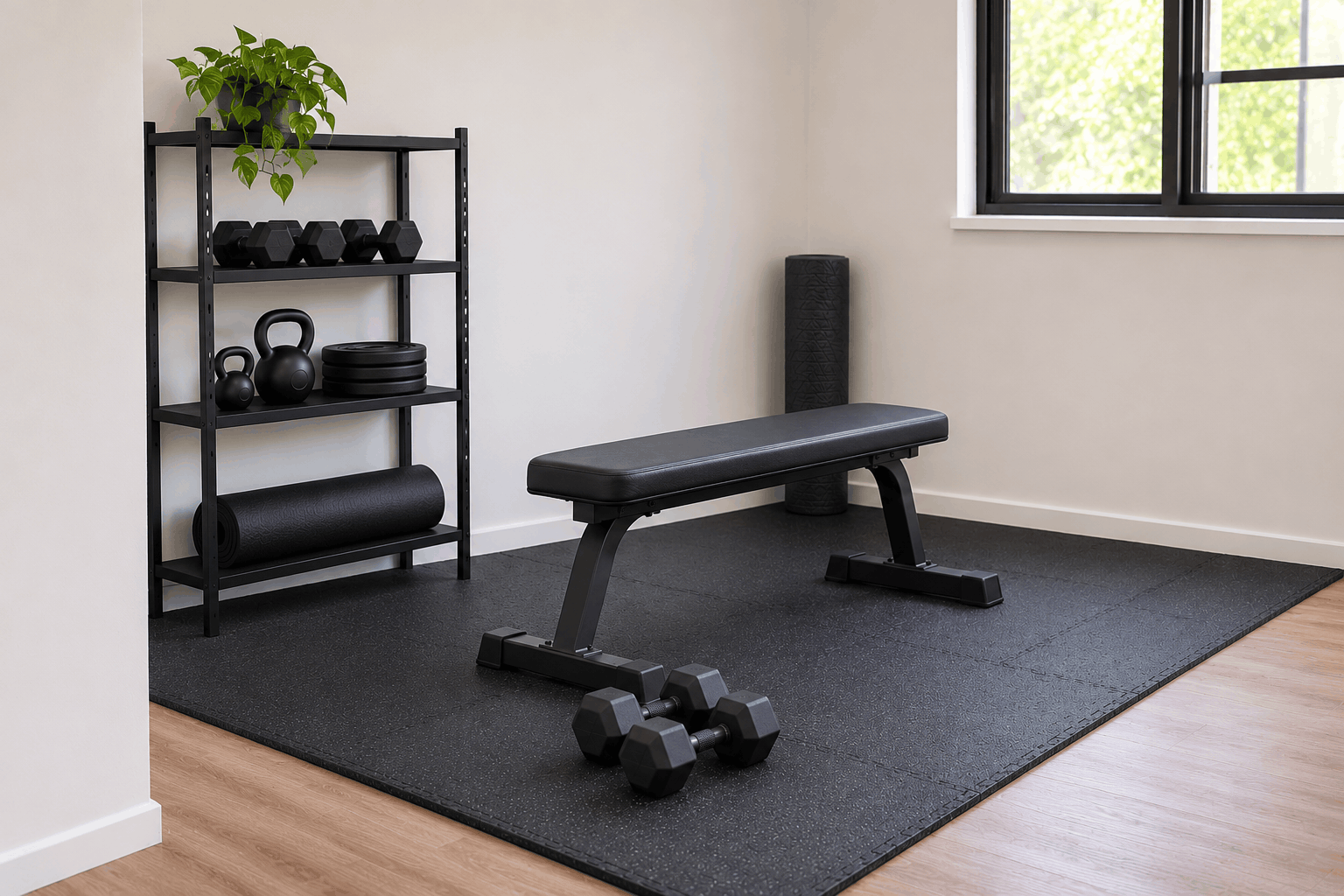
Setting up a home gym in a rented house doesn’t have to mean making permanent changes or giving up valuable living space. With careful planning, a few versatile pieces of equipment and suitable floor protection, you can create a practical workout area that fits your routine.
Whether you’re using a spare bedroom, a corner of the living room or part of a garage, the key is to choose a setup that suits your space, protects the existing floor where possible and can be removed when you move.
1. Check Your Tenancy Agreement
Before buying equipment or changing your space, review your tenancy agreement. Check for restrictions on alterations, floor coverings and the use of heavy equipment.
If you’re unsure whether your planned setup is permitted, ask your landlord or letting agent before making changes. In Ireland, tenants generally need their landlord’s written consent before altering or improving the property. Check the Residential Tenancies Board’s guidance.
It’s also sensible to photograph the existing floor before setting up your gym. This gives you a record of its condition and may be useful if questions about damage arise when you move out.
2. Choose Equipment That Fits Your Space
You don’t need a fully equipped gym to exercise effectively at home. Start with equipment that supports your training goals without overcrowding the room.
Consider these options:
- Adjustable dumbbells: Offer several weight options without requiring a large collection of individual dumbbells.
- Resistance bands: Provide a compact option for resistance exercises, mobility work and warm-ups.
- A foldable bench: Can support a range of exercises and be stored away when not in use.
- A workout mat: Provides a dedicated surface for stretching and bodyweight exercises.
Measure your available space before purchasing equipment. Allow enough clearance to perform movements safely, and consider where you’ll store everything after your workout.
If you’re planning to use a barbell, squat rack or heavier weights, make sure you have enough room to exercise safely and have considered whether the floor is suitable for the intended loads.
3. Protect the Existing Floor
Weights, equipment feet and repeated movement can mark or damage some floor surfaces. Suitable gym flooring can help protect the surface underneath, but no flooring solution guarantees that the original floor will remain undamaged.
Rubber gym mats are one option to consider for a dedicated workout area. Before choosing them, check the existing surface, the equipment you’ll use and the flooring manufacturer’s installation instructions.
Keep these precautions in mind:
- Remove grit and debris that could become trapped beneath the mats.
- Check that the surface is clean, dry, stable and suitable for the flooring.
- Inspect underneath the mats periodically for trapped moisture, marks or other changes.
- Avoid placing equipment on flooring that shifts, rocks or feels unstable.
- Follow the manufacturer’s guidance on installation, cleaning and compatibility.
Can You Put Rubber Gym Mats on Carpet?
Be cautious about installing rubber gym mats directly over carpet. Carpet is often softer and less stable than a solid floor, which can allow some gym tiles to move or rock underfoot. The mats and equipment may also flatten or mark the carpet beneath them.
For these reasons, some rubber gym flooring suppliers do not recommend installing their tiles over carpet. Check the guidance for the specific product you’re considering rather than assuming it will be suitable.
If your rental has deep carpet, an uneven surface or signs of damp, assess the conditions before proceeding. Stability matters, especially when using weights or other heavy equipment.
4. Consider Noise and Impact
If you live in an apartment, a shared building or a house with neighbours nearby, consider how your workouts might affect other people.
Dropping weights, jumping and moving heavy equipment can create impact noise and vibration. Rubber flooring may help reduce some impact noise, but its effectiveness depends on the flooring, the activity and the building structure. It will not soundproof a room or eliminate all vibration.
To make your workouts more considerate, lower weights under control, avoid dropping equipment and consider lower-impact exercises where appropriate. You can also choose workout times that are less likely to disturb others.
If you plan to use heavy weights on an upper floor, don’t assume that rubber mats alone make the floor suitable. Seek professional advice if you’re uncertain about the floor’s load capacity.
5. Keep Your Setup Flexible
A rental-friendly gym is easier to manage when you can pack it away without leaving permanent changes behind.
Choose freestanding equipment and portable storage where practical. Keep smaller items in a basket or storage box, and return weights and accessories to their designated places after training.
Avoid drilling into walls, fixing equipment permanently or applying adhesives to floors without the necessary permission. Before installing any flooring, consider how it will be removed and whether the material could affect the surface underneath.
A flexible setup also makes it easier to adapt your workout space if you move to a different property.
6. Start Small and Expand Gradually
It’s tempting to buy everything at once, but starting with a few versatile pieces can help you avoid spending money on equipment you rarely use.
Begin with the essentials for your training goals. As your routine develops, you can decide whether you need additional weights, a bench or other equipment.
Apply the same approach to your flooring. Measure the workout area before ordering mats and plan where your equipment will sit. This helps you work out how much coverage you need without buying more than necessary.
Ready to Build Your Home Gym?
You don’t need a dedicated gym room to create a practical workout space. Start with the equipment you need, plan your layout and choose flooring that is suitable for your existing surface.
Our 20mm Rubber Gym Mats provide a durable, anti-slip surface designed for home and garage gyms, with properties that can help reduce noise and vibration.
Create a training space you’re happy to use, whatever the season.
Frequently Asked Questions
Yes, in many cases. Choose suitable portable equipment, protect the existing floor where possible and check your tenancy agreement before making alterations. Your setup should also be appropriate for the room and intended training.
They may be suitable, depending on the existing floor, the mat material and the equipment being used. Check the manufacturer’s guidance and inspect the floor regularly. Mats can help protect a surface, but they do not guarantee that it will remain undamaged.
It depends on the flooring product and the carpet, but caution is essential. Soft carpet can make some tiles less stable and may become flattened or marked underneath. Check the manufacturer’s instructions before installing mats over carpet.
No. Rubber mats may reduce some impact noise, but they do not soundproof a room or eliminate structural vibration. Avoid dropping weights and consider the building and your training style when planning your setup.
The amount of space depends on your equipment and exercises. A small dedicated area may be enough for dumbbells, resistance bands and bodyweight training. Measure the space and allow sufficient clearance to move safely.