Choosing gym floor mats might seem straightforward, but the right flooring depends on how you train, what equipment you use and the surface underneath.
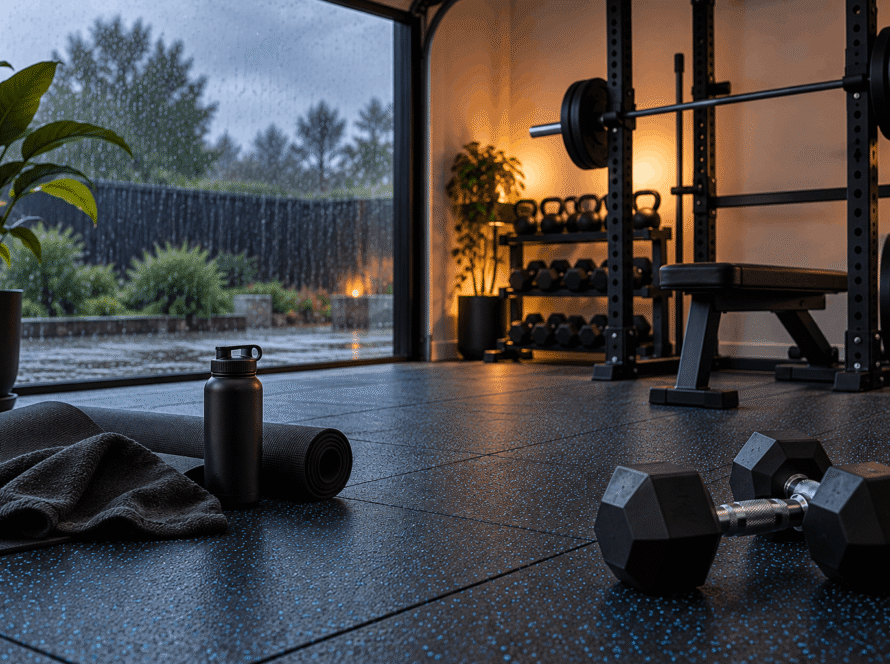
Whether you’re setting up a spare room, garage or dedicated workout area, choosing the right mats can make your training space more practical while helping protect the floor underneath.
Why Use Gym Floor Mats at Home?
Gym flooring creates a dedicated surface between your workout equipment and the floor underneath.
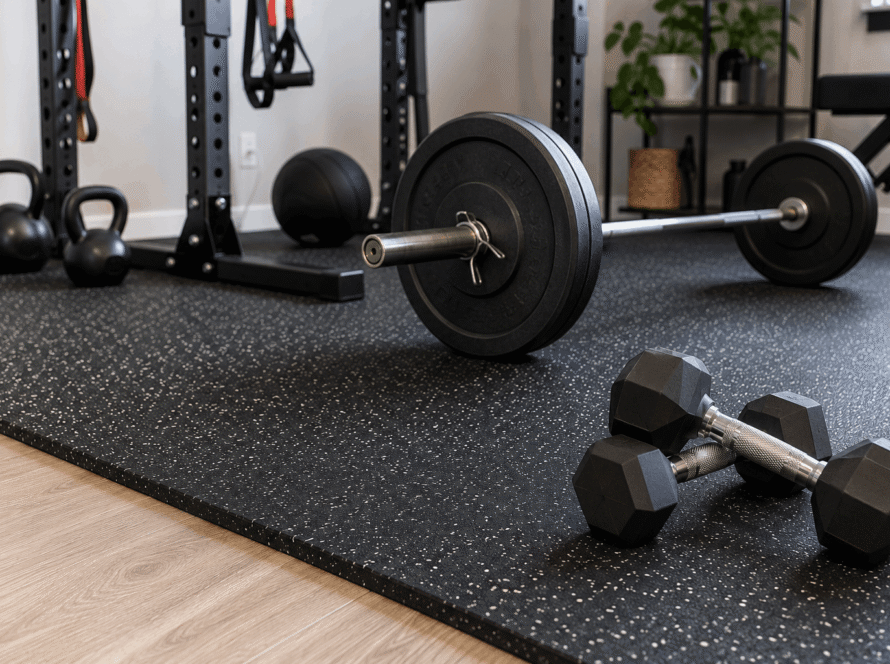
Rubber gym mats are commonly used because they are durable and suitable for regular gym use. They can help protect the underlying floor from equipment contact and provide a stable training surface. They can also help reduce some noise and vibration, although the amount of protection and noise reduction depends on the flooring itself and the surface underneath.
The important thing is to choose flooring based on how you actually use your home gym, rather than simply choosing the thickest option available.
What Should You Look for in Gym Mats?
There are several things worth considering before buying gym floor mats.
Thickness
Thickness is one of the first things people look at, but thicker does not automatically mean better.
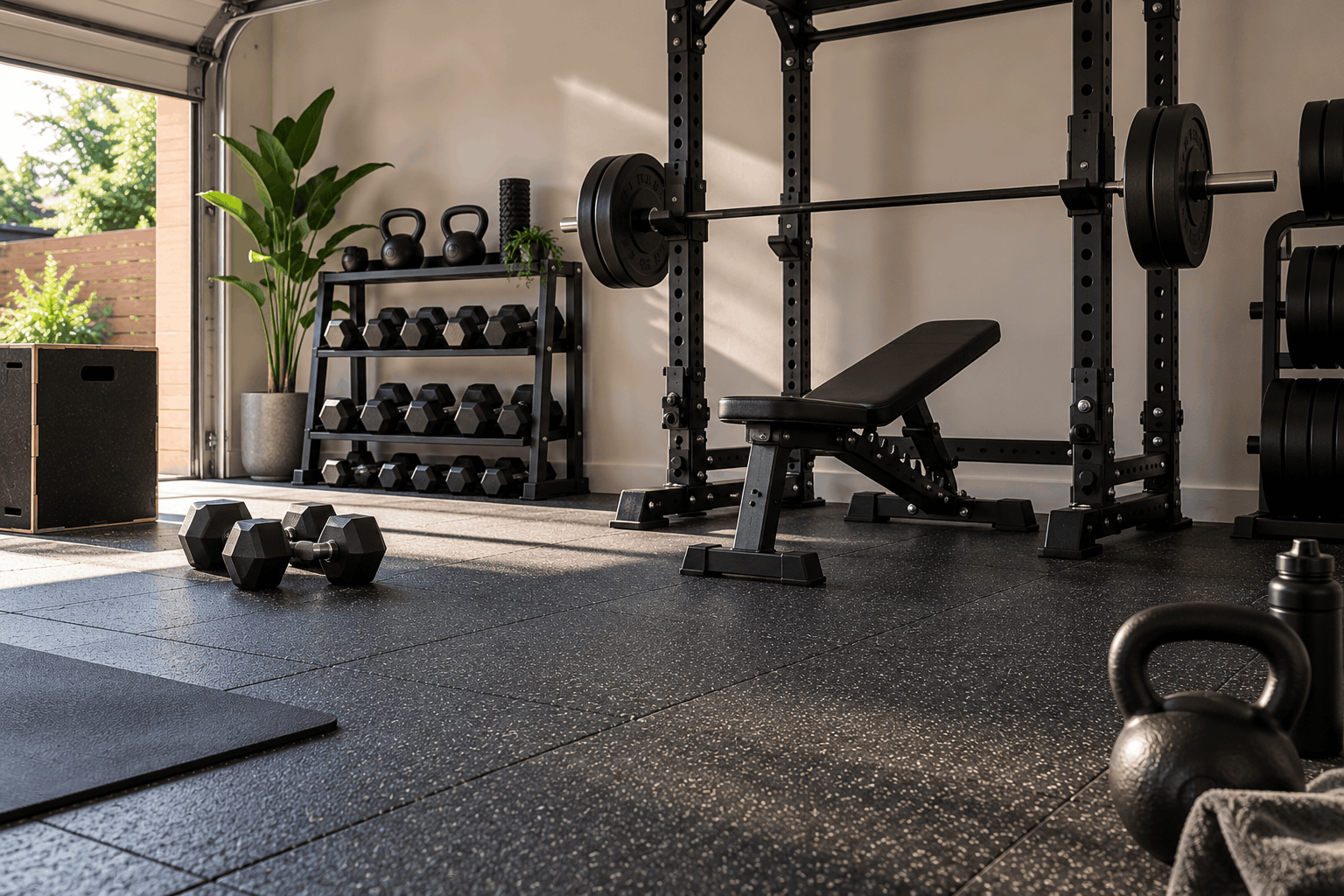
The appropriate thickness depends on your training, equipment, impact level and subfloor. Current flooring guidance commonly places lighter training and cardio at lower thicknesses, while general strength and free-weight areas often use thicker rubber. For many home gyms with racks, benches and free weights, 15mm to 20mm can be a practical range.
If your training involves repeatedly dropping loaded barbells or Olympic lifting, standard 20mm flooring may not provide enough impact protection on its own. A thicker specialist surface or dedicated lifting platform may be more appropriate.
Material
Rubber is a popular choice for gym flooring because it is durable and designed for regular use.
When comparing rubber mats, don’t look at thickness alone. The construction, density, surface and intended application can all affect how the flooring performs.
Size
The size of individual mats can make a difference when planning your home gym.
Smaller tiles can be practical for rooms where you only want to cover the training or equipment area. They also allow you to build the floor around the space you actually have.
For example, 50cm × 50cm tiles cover 0.25m² each, so four tiles cover 1m².
Stability
Your flooring should be properly installed and remain reasonably stable during normal use.
Movement can be affected by several factors, including the condition of the subfloor, how the tiles fit together, equipment loads and the type of training being performed.
Before installation, the underlying surface should generally be clean, dry, level and structurally sound.
Do You Need to Cover the Entire Floor?
Not necessarily.
If you’re working with a limited budget or a smaller room, you can focus on the areas where you actually train or where heavier equipment sits.
Start by measuring your planned training area. This makes it easier to calculate how much flooring you need and can help prevent unnecessary purchases.
For example, if your training area is 2m × 2m, you need 4m² of coverage, which would require 16 tiles measuring 50cm × 50cm.
Can Gym Mats Go on Concrete?
Rubber gym mats can be used over concrete when the surface is suitable and properly prepared.
Before installing, make sure the concrete is clean, dry and reasonably level. Significant cracks, damage or uneven areas should be addressed before installing the flooring.
The condition of the subfloor matters because rubber flooring does not automatically correct problems underneath it.
What About Heavy Weights?
This is where choosing flooring based on your actual training becomes especially important.
For general strength training, dumbbells, kettlebells, benches and racks, suitable rubber flooring can provide a practical training surface.
However, dropping heavy weights is different from simply using them.
Repeated deadlifts, Olympic lifts and loaded-barbell drops create much higher impact. For these situations, flooring guidance commonly recommends thicker rubber, specialist impact
Common Mistakes When Buying Gym Mats
Choosing based only on thickness:
A thicker mat isn’t automatically the right choice. Consider your training, equipment and subfloor as well.
Buying before measuring:
Measure your training area before ordering.
Covering more floor than necessary:
You may only need flooring in your training and equipment areas.
Ignoring the subfloor:
An uneven or unsuitable surface can affect the performance and stability of your flooring.
Using standard flooring for heavy drops:
If you’re regularly dropping loaded barbells, consider specialist impact protection or a lifting platform.
Assuming all gym flooring is the same:
Different rubber products have different constructions and specifications, so check the manufacturer’s intended use before buying.
Final Thoughts
The right gym floor mats aren’t necessarily the thickest or most expensive option.
Instead, think about how you train, what equipment you use, how much impact the flooring needs to handle and what is underneath it.
For many home gyms, a good-quality rubber surface can provide a practical foundation for strength and fitness training. If your workouts involve significantly higher impact, you may need a more specialised flooring solution.
Start by measuring your space, identifying your training needs and then choosing flooring that matches them.
Ready to Build Your Home Gym?
Once you’ve worked out how much flooring you need, choosing the right mats becomes much easier.
Our 20mm Rubber Gym Mats provide a durable, anti-slip training surface for home and garage gyms, with properties that help reduce noise and vibration.
Start simple. Train consistently. Build from there.