Everything you need to know to get started, without a gym membership
If you’ve been thinking about starting strength training but don’t want to join a gym, you’re not alone.
The good news is that you don’t need a commercial gym or a room full of expensive equipment to begin.
Strength training can be done at home using your bodyweight, resistance bands, dumbbells, kettlebells or other basic equipment. The American College of Sports Medicine’s latest guidance also highlights home-based training and simple equipment as effective options for healthy adults.
The hardest part is often not knowing what to buy.
It’s knowing where to start.
Here’s how to build a simple strength-training routine at home.
What Is Strength Training?
Strength training, also called resistance training, involves working your muscles against resistance.
That resistance can come from:
- Your bodyweight
- Dumbbells
- Kettlebells
- Resistance bands
- Barbells
- Weight machines
You don’t necessarily need heavy weights to get started.
The goal is to challenge your muscles and gradually progress as you become stronger.
How Often Should You Strength Train?
For adults, the World Health Organization recommends muscle-strengthening activities involving the major muscle groups on at least two days per week.
For someone completely new to strength training, two or three sessions per week can be a practical starting point.
For example:
Monday — Full body
Wednesday — Full body
Friday — Full body
You don’t have to follow this exact schedule.
The important thing is choosing a routine that fits your life and that you can realistically repeat. ACSM’s 2026 resistance-training guidance similarly emphasises that consistency matters more than making your programme unnecessarily complicated.
What Exercises Should Beginners Do?
You don’t need dozens of exercises.
Start by learning a few basic movement patterns.
Squat
Examples include:
- Bodyweight squats
- Goblet squats
- Dumbbell squats
Hinge
Examples include:
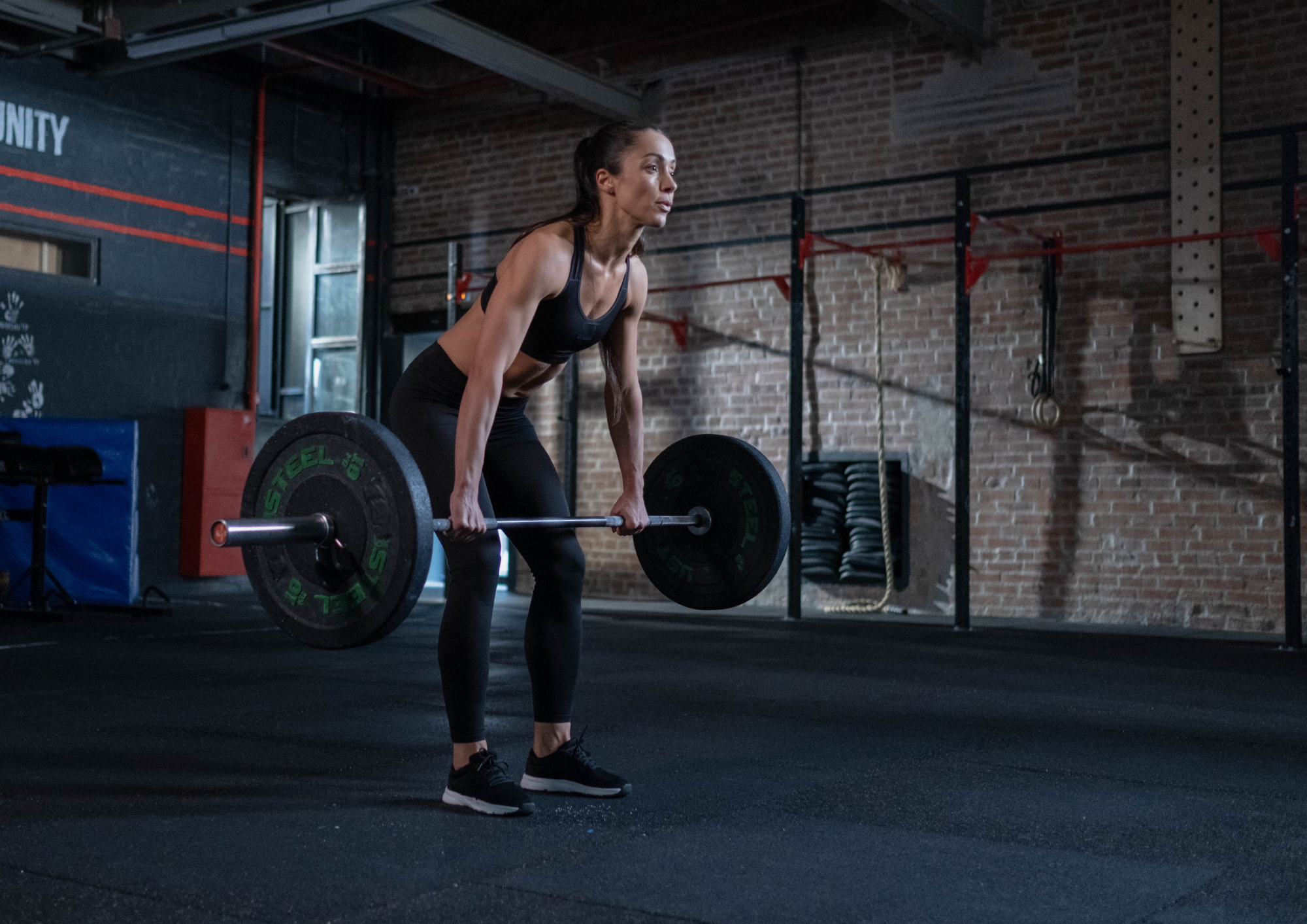
- Romanian deadlifts
- Kettlebell deadlifts
- Hip hinges
Push
Examples include:
- Push-ups
- Dumbbell chest press
- Overhead press
Pull
Examples include:
- Dumbbell rows
- Resistance-band rows
- Other pulling exercises
Core
Examples include:
- Planks
- Dead bugs
- Loaded carries
These movements can form the foundation of a simple full-body routine.
Do You Need Weights?
No. You can start strength training with bodyweight exercises alone.
As you become more comfortable, adding equipment can give you more ways to increase resistance and progress your training.
A pair of adjustable dumbbells, for example, can provide a lot of versatility without taking up much space.
You can then add equipment based on your goals rather than buying everything at once.

How Do You Make Strength Training Harder?
This is where progressive overload comes in.
As your body adapts, you need to gradually increase the challenge.
That could mean:
- Adding weight
- Increasing repetitions
- Adding a set
- Using a more challenging variation
- Improving your range of motion
- Improving your technique
You don’t need to increase everything at once.
Small, gradual changes are enough.
Keep Your First Workouts Simple
A common mistake when starting is trying to do too much.
You don’t need a complicated six-day programme with dozens of exercises.
Start with a manageable full-body session.
For example:
Squat
Push
Pull
Hinge
Core
Choose an appropriate exercise for each movement and focus on learning good technique.
Then give yourself enough time to recover before your next demanding session.
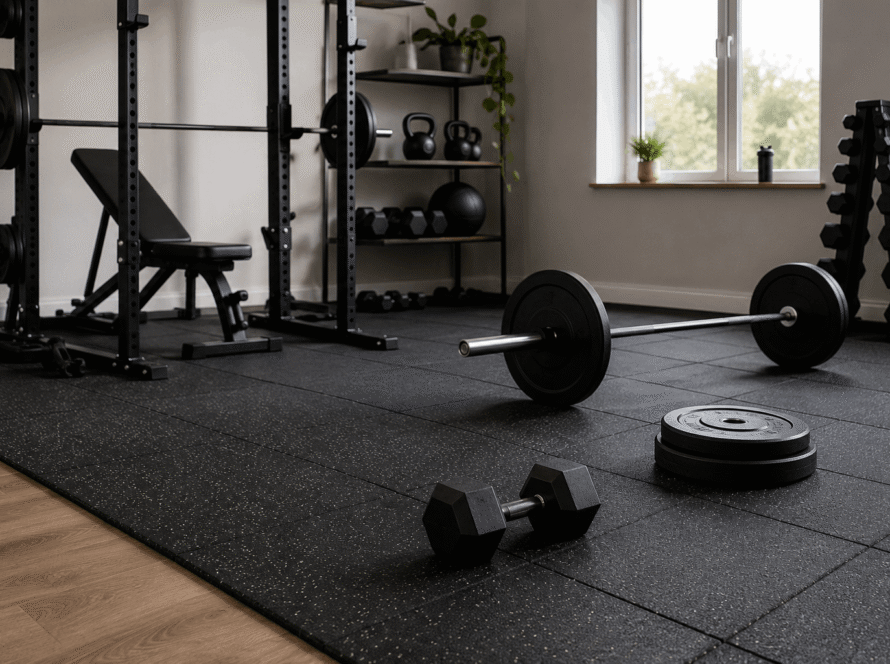
Create a Space You Actually Want to Train In
Your workout environment matters too.
You don’t need an entire room dedicated to fitness.
A spare room, garage or even a defined corner can become your training area.
Keep the equipment you use regularly accessible and make sure you have enough clear space to perform your exercises safely.
A suitable training surface can also make a difference to the space.
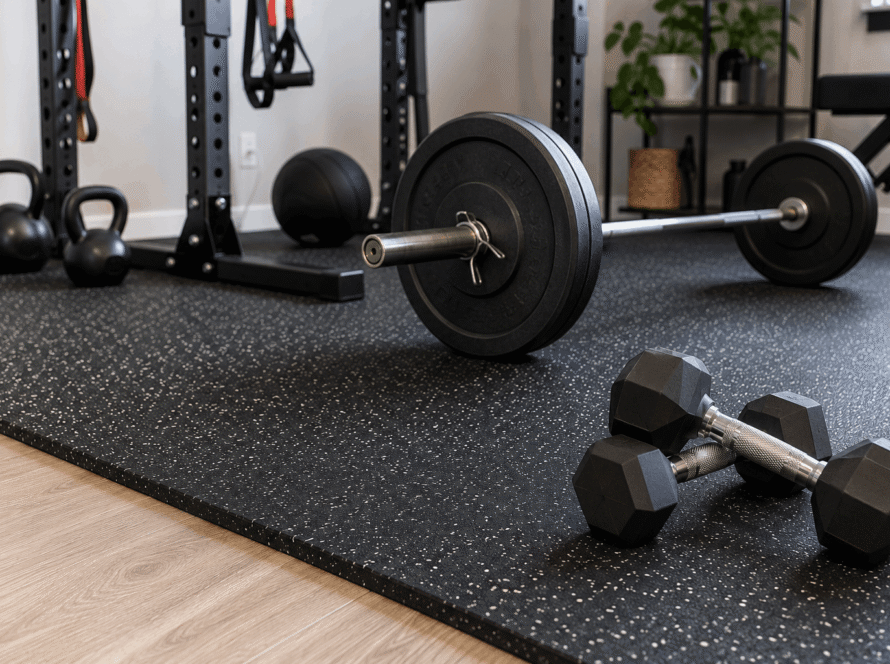
Rubber gym flooring provides a durable, anti-slip surface for many home-gym setups and can help reduce some impact, noise and vibration compared with training directly on a hard floor.
You don’t necessarily need to cover the entire room either.
Floor the area where you actually train.
What About Cardio?
Strength training is only one part of physical activity.
WHO recommends that adults also aim for 150–300 minutes of moderate-intensity aerobic activity per week, or 75–150 minutes of vigorous activity, alongside muscle-strengthening activities on at least two days per week.
That doesn’t mean you need to spend hours on a treadmill.
Walking, cycling, running and other activities can all contribute to your weekly movement.
The best routine is one that fits your lifestyle and goals.
The Biggest Beginner Mistake?
Trying to be perfect.
You don’t need to have the perfect workout every time.
You need to keep showing up.
If you miss a session, get back to your routine.
If an exercise is too difficult, modify it.
If you don’t have much time, do what you can.
Building strength is a process.
Start simple. Stay consistent. Progress gradually.
Build Your Home Training Space
You don’t need to build the perfect home gym before you start strength training.
Start with the space you have, the equipment you need and a routine you can actually follow.
Then build from there.
Our 20mm Rubber Gym Mats can help you create a dedicated training area in a spare room, garage or home gym.
They’re designed with an anti-slip surface and to help reduce noise and vibration, making them a practical option for home strength-training spaces.