A simple step-by-step guide, plus our Tile Calculator
Choosing how much gym flooring you need starts with one thing: getting your measurements right.
Measure too little and you may end up with gaps around your training area. Order too much and you could spend money on flooring you don’t actually need.
The good news is that measuring your space is straightforward.
Here’s how to do it.
1. Decide What Area You Actually Want to Cover
You don’t always need to cover the entire room. Start by deciding where your actual training area will be.
For example, you may want flooring underneath:
- A squat rack
- A bench
- Dumbbells and kettlebells
- A cable machine
- Your main workout area
If the room has other areas that aren’t part of your gym, there’s no need to include them in your measurement.
Measure the space you actually want to floor.
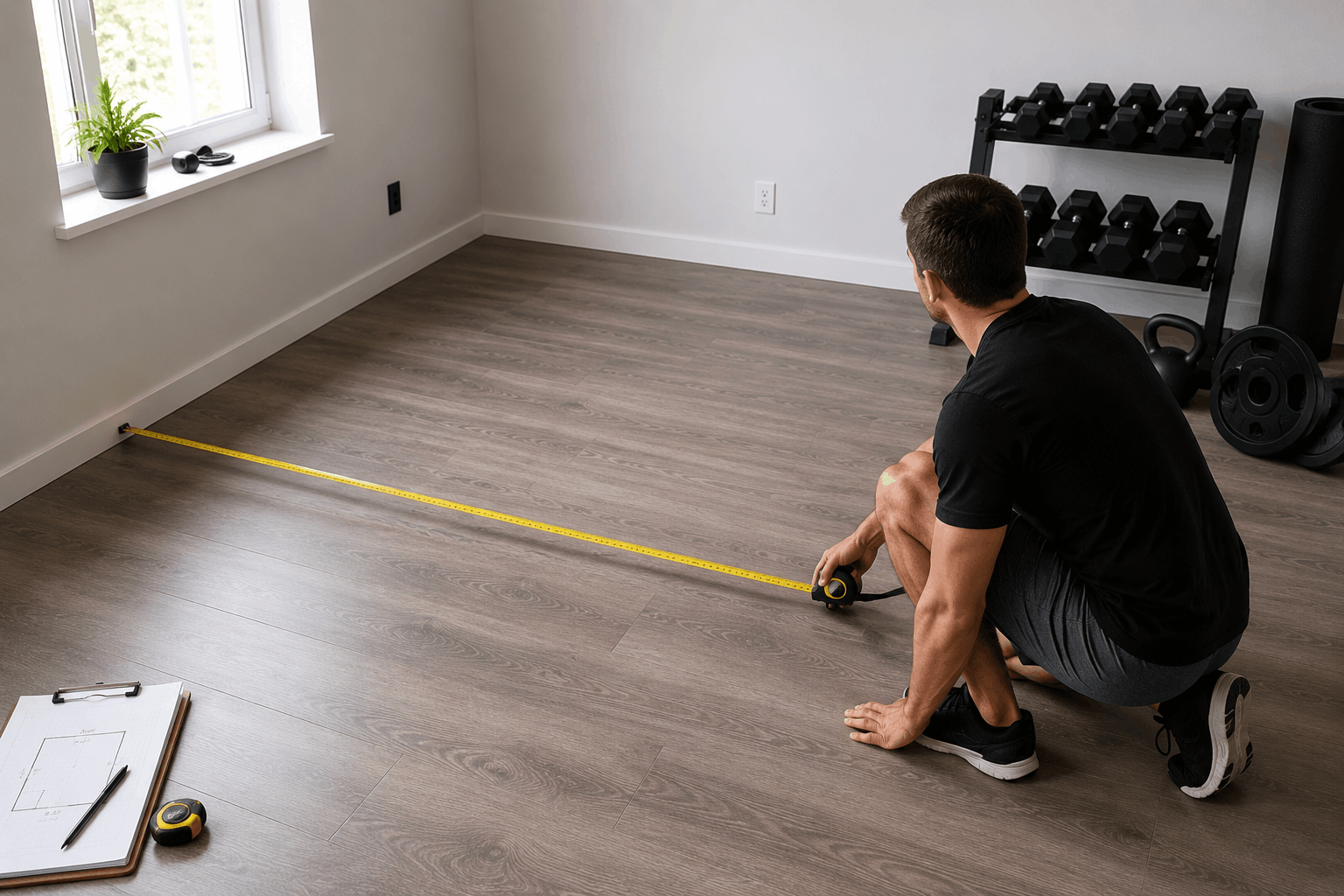
2. Measure the Length
Using a tape measure, measure from one end of your training area to the other.
Record the measurement in metres.
For example, if your space is: 4 metres long, write down 4m.
Try to measure the actual floor area rather than estimating based on the overall room dimensions.
3. Measure the Width
Next, measure the width of the area you want to cover.
For example: 3 metres wide
You now have the two measurements you need:
Length × Width
These measurements give you the overall floor area you’re working with.
4. Think About Your Equipment Layout
Before ordering, consider where your equipment will actually sit.
Your flooring should provide enough coverage for the areas where you’ll be training and where equipment will regularly sit or move.
Think about:
- Where will I stand?
- Where will my weights be placed?
- Where will my bench or rack sit?
- Do I need space around the equipment?
This is particularly important if you’re flooring only part of a larger room.
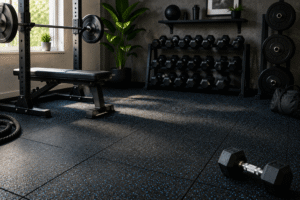
5. Use Our Tile Calculator
Once you have your measurements, you don’t need to work out the number of mats manually.
Use our Gym Tile Calculator then simply enter the measurements of your training area and the calculator will help you work out how many tiles you need.
Measure → Calculate → Order
No complicated calculations. No guessing.
6. What If Your Space Isn’t a Perfect Rectangle?
Not every home gym is a simple box.
You might have:
- An L-shaped room
- A corner around a door
- An area around built-in furniture
- Different sections of flooring
For an irregular space, break it into smaller rectangular sections.
Measure each section separately, then use those measurements to work out your overall flooring requirement.
You can also plan where your mats will sit before ordering so you know where any trimming may be needed.
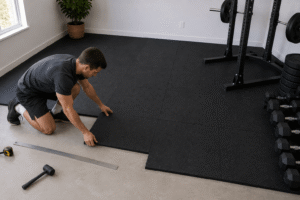
7. Don’t Forget the Installation
Once you’ve worked out how many mats you need, you can plan your installation.
Our mats come with interlocking connectors to join the tiles together.
An installation guide is included with your order, and you can also follow our step-by-step installation video on our website.
That means you can measure your space, calculate what you need and plan your installation before your mats even arrive.
A Simple Way to Get the Right Amount
You don’t need to be good at maths to work out your gym flooring.
Just:
- Measure your training area
- Record the length and width
- Use our Gym Mat Tile Calculator
- Enter your measurements into the Tile Calculator
- Check how many tiles you need
- Order your mats
That’s it.
Ready to Work Out What You Need?
Measure your space, then use our Tile Calculator to work out how many mats you need.
Our 20mm rubber gym mats feature an anti-slip surface, are designed to help reduce noise and vibration, and are CE certified, built to handle real training, not just sit there and hope for the best.