What can cause gym mats to shift and how to keep your flooring stable
When choosing gym flooring, one practical question often gets overlooked: will the mats stay in place during workouts?
Rubber flooring can be a practical surface for a home gym, but movement can happen depending on the flooring, the surface underneath it and how the space is used. Here’s what to consider before you buy.
Why Do Gym Mats Move?
Several things can cause gym flooring to shift, including:
- An uneven or poorly prepared subfloor
- Gaps between tiles
- Moving heavy equipment across the floor
- Repeated lateral movement
- Flooring that isn’t fitted correctly
- An installation method that doesn’t suit the space
The condition of the floor underneath matters too. Installation guidance for rubber gym flooring generally recommends a clean, dry and reasonably level subfloor before installation.
Does Thicker Flooring Move Less?
Not necessarily.
It’s easy to assume that a thicker mat will automatically stay in place because it weighs more. However, thickness is only one factor.
The flooring’s construction, density, size, subfloor and installation method can all affect how stable it is.
That’s why choosing gym flooring shouldn’t be based on thickness alone.
Do Rubber Gym Mats Need to Be Glued Down?
Not always.
Some rubber tiles are designed to be loose-laid or interlocked, while other flooring systems are designed to be installed with adhesive.
For a home gym, the right option depends on the specific flooring, the room and how heavily the space will be used. Always follow the manufacturer’s installation recommendations rather than assuming every rubber mat needs to be permanently fixed.
How Can You Reduce Movement?
A few simple steps can help:
Prepare the floor: Make sure the subfloor is clean, dry and reasonably level.
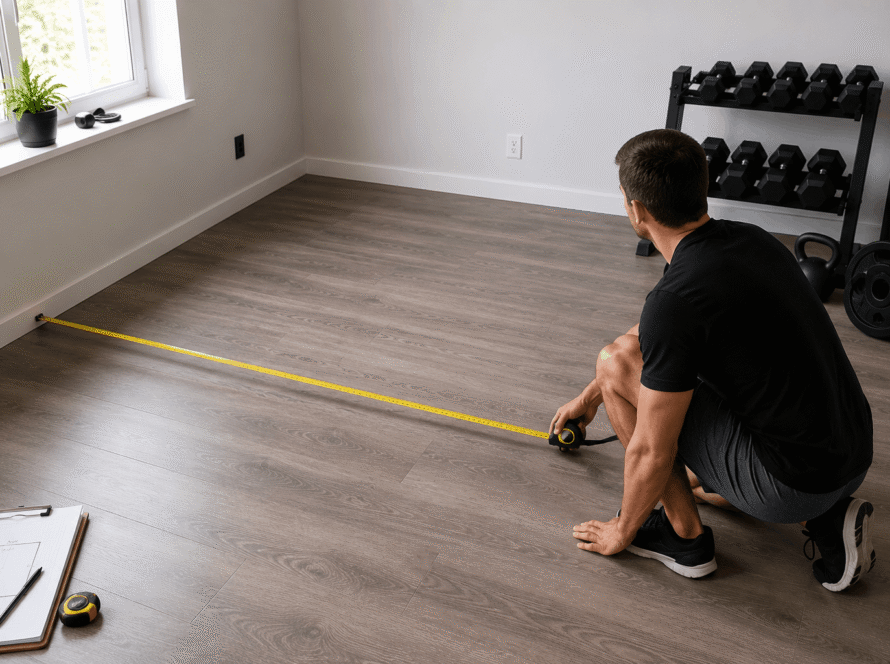
Plan your layout: Measure the area before installing your flooring and work out where the tiles will go.
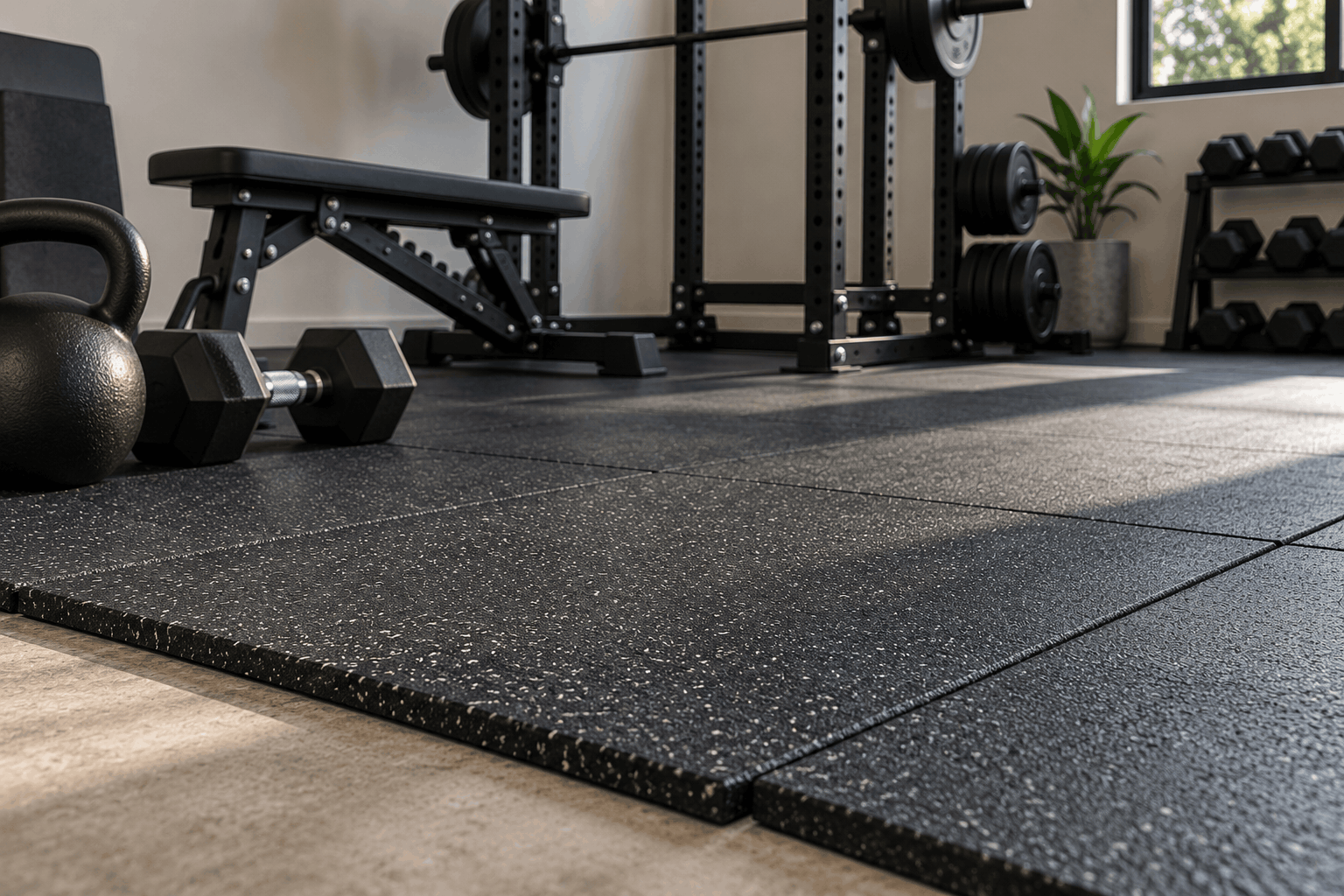
Fit the tiles properly: Keep joints aligned and avoid unnecessary gaps between tiles.
Consider your training: A space used for controlled strength training may have different requirements from one used for repeated high-impact movements or heavy weight drops.
Follow the installation instructions: If the flooring manufacturer recommends adhesive or another fixing method for your particular application, follow that guidance.
What About a Concrete Garage Floor?
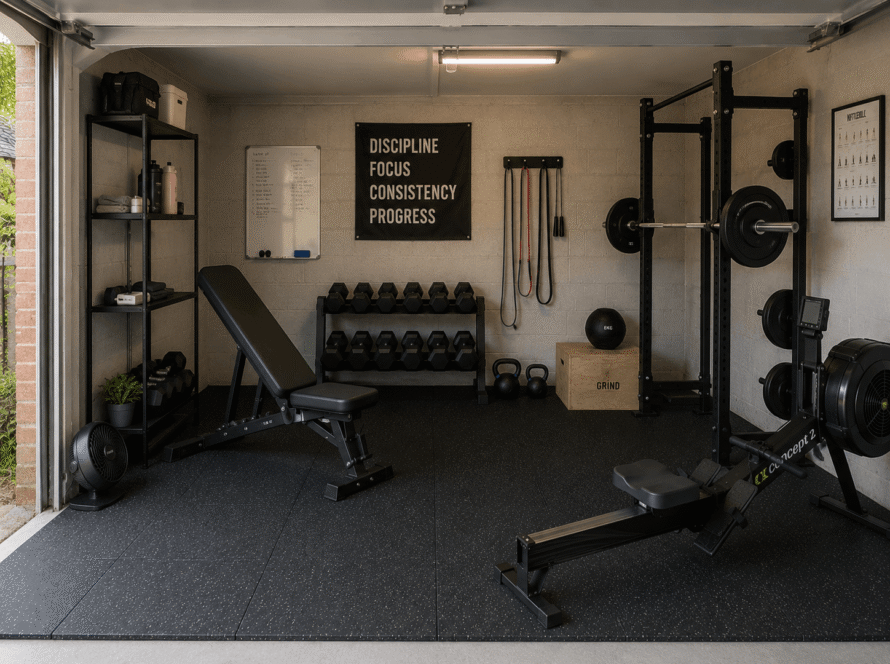
Concrete is a common base for garage gyms, but it can have dust, cracks or uneven areas that affect installation.
Rubber flooring can be installed over suitable concrete, provided the surface is properly prepared. If the floor has significant moisture, damage or unevenness, address those issues before installing your gym flooring.
Final Thoughts
Gym flooring shouldn’t move excessively during normal use, but there isn’t one factor that guarantees stability.
Before buying, consider the flooring itself, your subfloor, how the mats will be installed and the type of training you’ll be doing.
A little planning before installation can help you avoid problems later.
Ready to Get Started?
Whatever space you’re working with in Cork, start by thinking about how you want to train, what equipment you actually need and how much space you have available.
Our 20mm rubber gym mats are anti-slip, noise and vibration reducing, and CE certified.