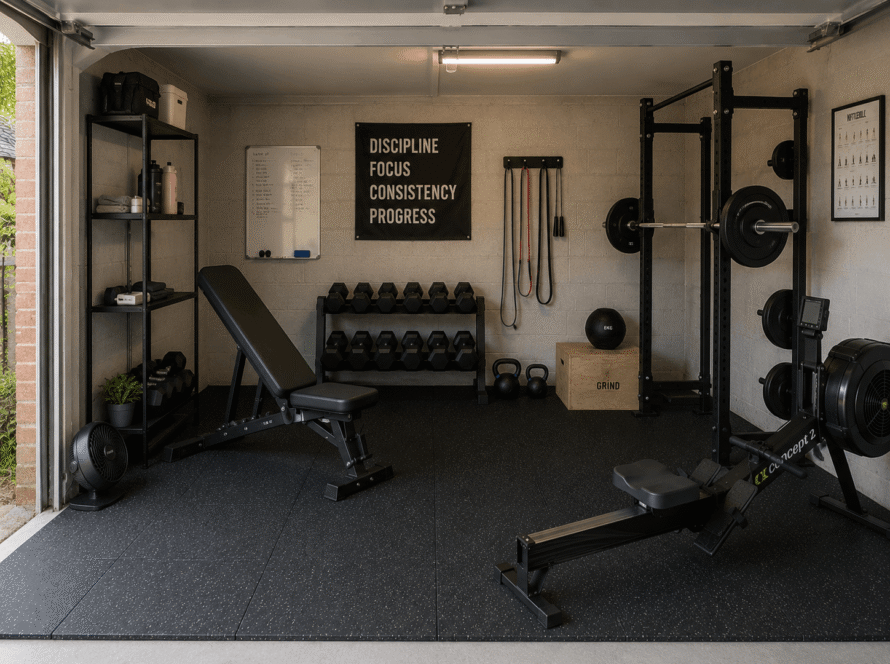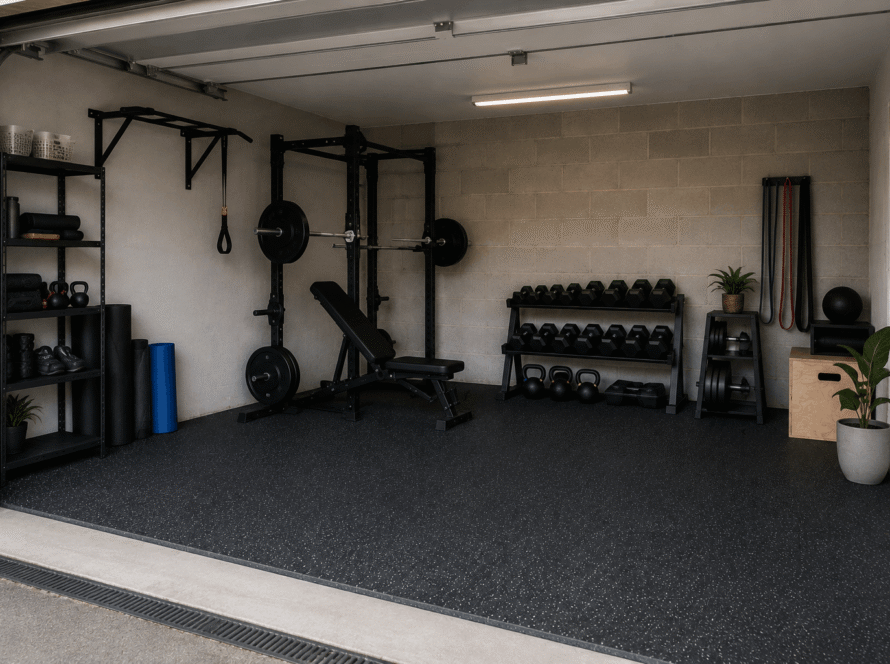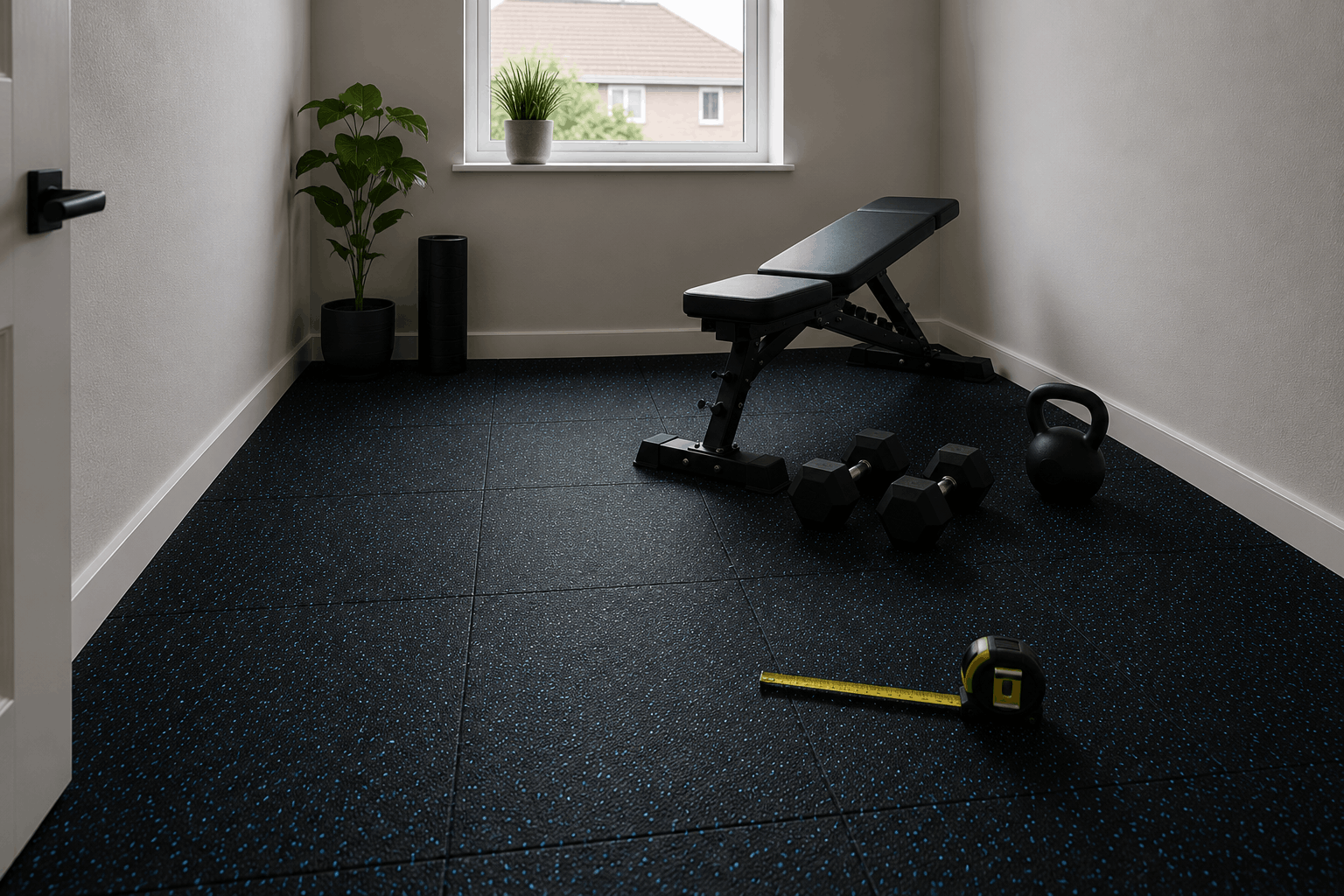
Everything You Need to Know Before Building Your Home Gym
Whether you’re converting a spare room, garage, box room, or garden room, choosing the right flooring is one of the first, and most important, decisions you’ll make. And if you’ve never done this before, that’s completely normal. This guide walks through everything you need to know, no jargon required.
The right home gym flooring doesn’t just improve how your space looks, it protects your floors, reduces noise, improves grip, and makes training feel safer and more comfortable from day one.
Why Gym Flooring Matters
It’s tempting to spend your whole budget on weights, a bench, or a rack first — we get it, that’s the exciting part. But without proper flooring underneath, heavy equipment can damage your floors, create more noise than you’d expect, and make workouts feel less stable than they should.
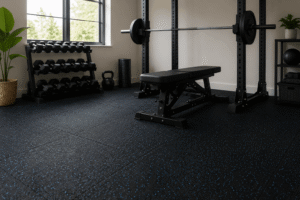
Quality gym flooring helps:
- Protect wooden, tiled, and concrete floors
- Reduce noise and vibration
- Improve grip during exercise
- Cushion impact from weights
- Create a space that actually feels like “your gym”
- Extend the lifespan of your equipment
No matter how big or small your setup is, flooring is the sensible place to start.
What Type of Flooring Is Best for a Home Gym?
There are a few options out there, here’s an honest breakdown of each, so you can make the right call for your space.
Rubber Gym Mats
The most popular choice for home gyms, and for good reason, excellent durability, shock absorption, and grip.
Ideal for: strength training, functional fitness, home workout rooms, spare rooms, garage gyms
Benefits: excellent floor protection, anti-slip surface, noise reduction, easy to clean, long-lasting
Foam Mats
Lightweight and inexpensive, but really better suited to stretching, yoga, or light bodyweight work. They compress too easily under heavier weights or equipment, so we wouldn’t recommend them if that’s your plan.
Vinyl Flooring
Looks the part, but offers little impact protection and can get slippery once a workout gets more intense.
Carpet
Common in spare rooms already, but not built for this job, it traps moisture, makes equipment unstable, and wears down fast under load.
Why We Recommend Rubber Gym Flooring
We’re a little biased, but for good reason, rubber gym mats offer the best balance of durability, comfort, and practicality for most home gyms we see.
Our mats are:
- 20mm thick
- Anti-slip
- Noise and vibration reducing
- CE certified
- Easy to install, no experience needed
- Suitable for spare rooms, garages, and home gyms of any size
Whether you’re setting up a compact corner or a full training room, this is a solid place to start.
What Size Gym Flooring Do You Need?
This part trips people up more than anything else, but it doesn’t need to. Here’s roughly how it breaks down:
4sqm — Box rooms, spare rooms, bench workouts, dumbbells, functional training
10sqm — Home gyms, power racks, weight benches, free weights
20sqm — Larger home gyms, multiple pieces of equipment, functional training areas
100sqm+ — Planning something bigger or commercial? Contact us for a custom quote
Still not sure which fits your space? That’s genuinely fine send us your room dimensions and we’ll help you figure it out, no pressure.
How Thick Should Home Gym Flooring Be?
For most home gyms, 20mm rubber flooring hits the sweet spot between comfort, stability, and floor protection. Thinner mats often can’t absorb enough impact during weightlifting, while much thicker options are usually only needed for commercial settings or repeated Olympic lifting.
Our 20mm mats are built to suit most home gym users, whether you’re training with free weights, cardio equipment, or strength machines.
Where Can You Install Home Gym Flooring?
Wherever you’ve got the space, really:
- Spare rooms
- Box rooms
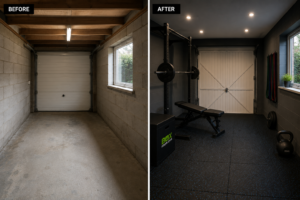
- Garages
- Garden rooms
- Sheds
- Commercial gyms and personal training studios
Wherever you’re planning to train, the right flooring underneath makes it safer and built to last.